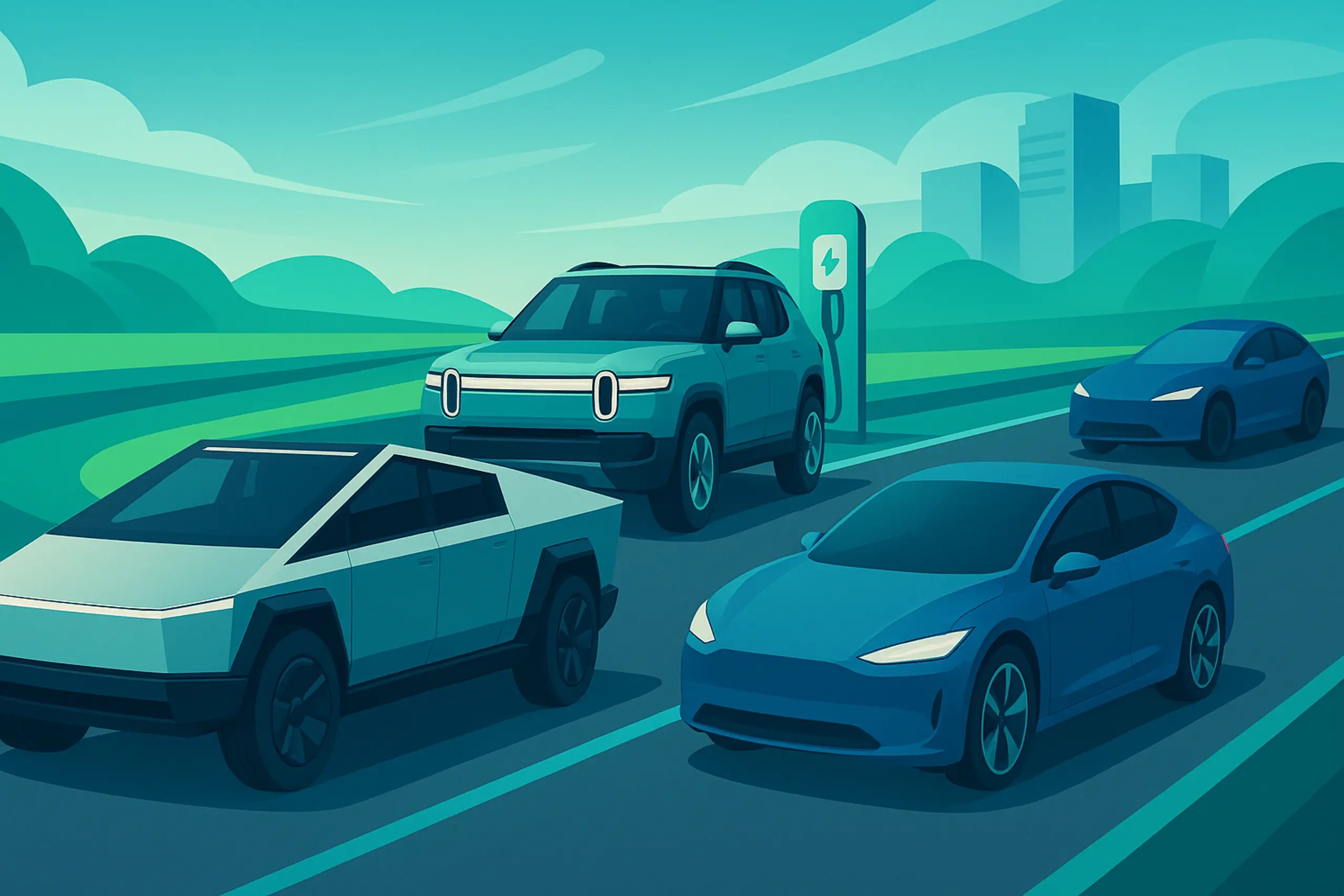
Electric vehicles 2025 (EVs) continue to accelerate their transformation of the global auto industry in 2025. From Tesla’s long‑awaited Cybertruck ramp‑up to Rivian’s more affordable R2 SUV on the horizon, automakers are sharpening their lineups and doubling down on battery, software, and charging innovations. Here’s a deep dive into what’s new from Tesla, Rivian, and other leading players—and what it means for drivers and the broader market.
Global EV Momentum in 2025
Worldwide EV and plug‑in hybrid sales jumped 24% in June 2025 compared to a year earlier, driven by strong growth in China and Europe—even as U.S. sales dipped slightly amid policy changes to tax credits. According to the International Energy Agency, global electric car sales topped 17 million in 2024, a 25% year‑over‑year increase, underscoring that EV adoption remains on an upward trajectory.
Tesla’s 2025 Highlights
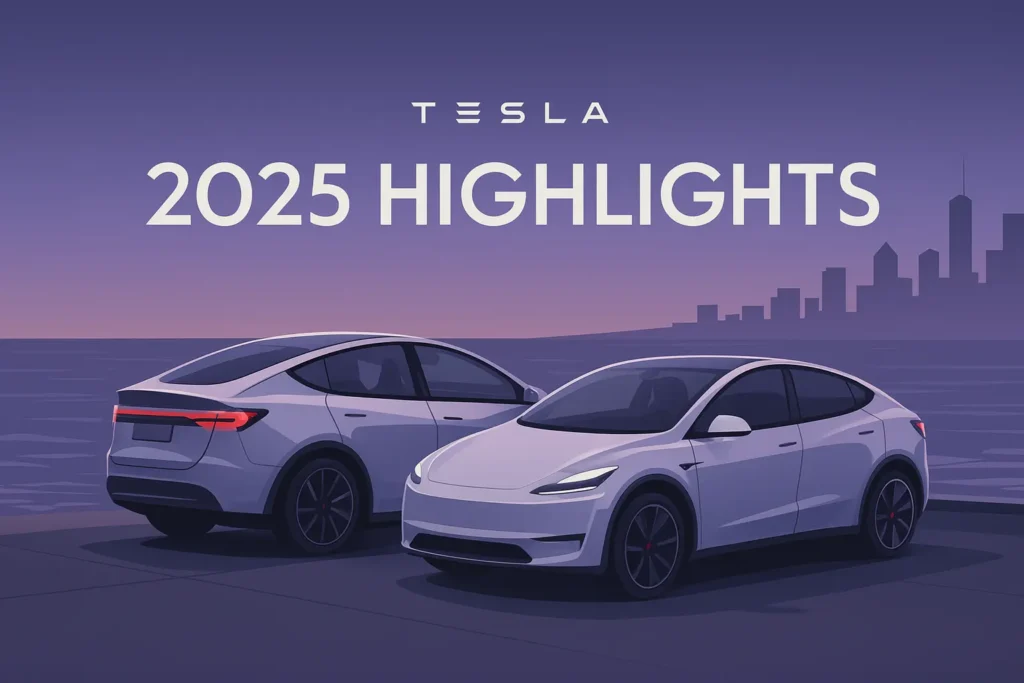
Cybertruck Production and Global Rollout
On July 1, 2025, Tesla officially unveiled the production‑ready Cybertruck with subtle design tweaks—more aerodynamic panels, a refined interior, and improved materials—after years of delays. Following that reveal, Tesla launched Cybertruck operations in Saudi Arabia, UAE, and Qatar—its first market expansion outside North America—with deliveries slated for late 2025 alongside new Supercharger station build‑outs.
Delivery Trends and Model Refreshes
Tesla’s Q1 2025 vehicle deliveries fell to roughly 336,700 units, down 13% year‑over‑year amid mounting competition and political backlash. Cybertruck numbers remain a small fraction of total deliveries—estimates put early 2025 sales below 50,000 units—while the Model 3 and Model Y continue to represent Tesla’s volume backbone.
Beyond pickups, Tesla is preparing a new mass‑market crossover codenamed “Redwood,” targeting mid‑2025 production at its Texas Gigafactory. This compact electric SUV aims for a more accessible price point, though precise specs remain under wraps. Meanwhile, Tesla is advancing its autonomous ambitions: an unsupervised Full Self‑Driving release is still on track for California by the end of 2025.
Rivian’s 2025 Roadmap
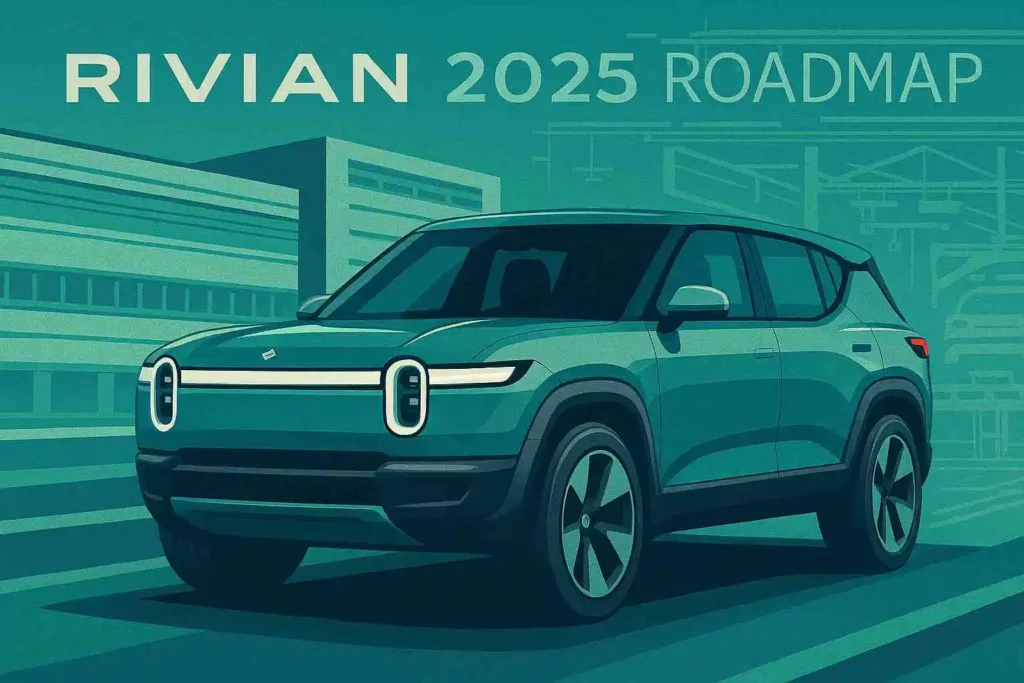
R2 SUV and Manufacturing Build‑Out
Rivian’s next major model, the mid‑size R2 SUV, is positioned as a more affordable entry at an estimated $45,000 and is slated to begin production in the first half of 2026. To support that launch, Rivian has expanded its Normal, Illinois plant by 1.1 million square feet—accelerating tooling and line builds in mid‑2025.
Workforce and Cost Management
In June 2025, Rivian cut roughly 140 manufacturing roles (about 1% of its workforce) to streamline operations ahead of the R2 rollout and manage cash burn as it scales production capacity.
Other Key EV Players in 2025
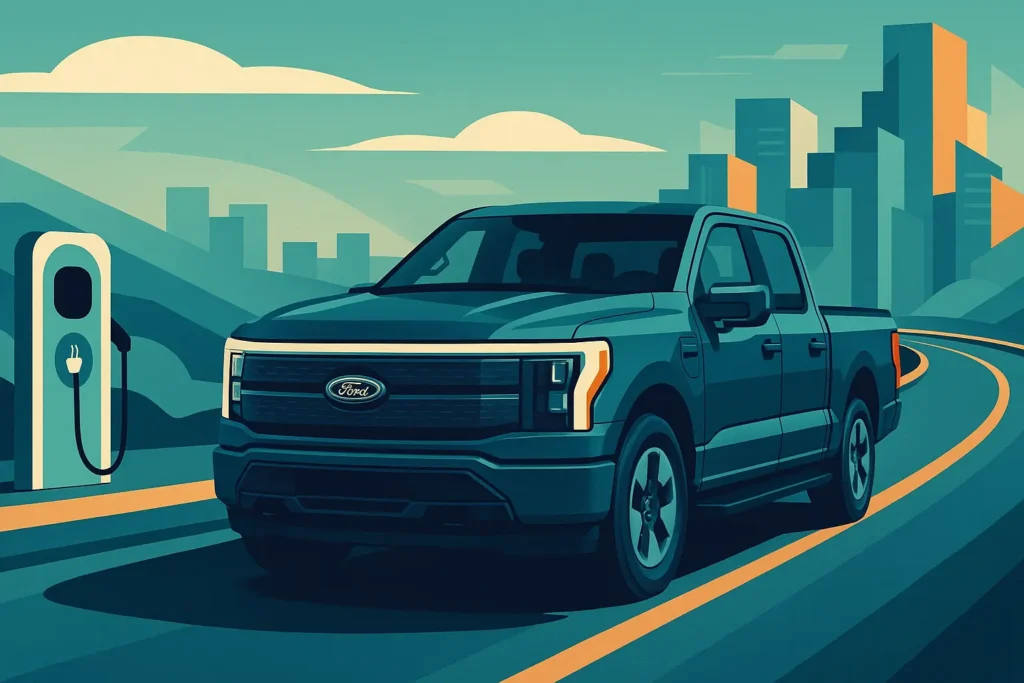
- Ford F‑150 Lightning
The electric variant of America’s best‑selling pickup saw continued strong demand in early 2025, leading EV pickup sales with over 13,000 units sold so far this year. - BYD’s Global Ascent
China’s BYD surpassed Tesla in annual revenues in 2024, leveraging in‑house battery tech and cost‑efficient manufacturing to rapidly expand into new markets—posing a formidable rival to Western OEMs. - Lucid, Volkswagen, and Others
Legacy and luxury brands are also stepping up: Lucid Motors is gearing up for its Gravity SUV debut in late 2025, Volkswagen is expanding its ID lineup beyond the Buzz van, and startup entrants continue to emerge with niche, premium offerings.
Battery, Software, and Infrastructure Innovations
Next‑Gen Platforms and Cells
Tesla’s Redwood platform will integrate 4680‑format cells and streamlined architecture, boosting range and lowering costs for future models. Rivian and other OEMs are designing modular skateboard chassis to accommodate diverse body styles and battery-pack sizes.
Charging Networks and Policy Support
Tesla’s Supercharger network now spans six continents, with aggressive station builds in the Middle East and Southeast Asia. Public charging infrastructure is also benefitting from renewed government incentives—such as the UK’s £650 million subsidy program for home and public chargers, running through 2029—even as automakers partner with networks like Ionity and EVgo to widen access.
Software and Autonomy
Over‑the‑air updates remain a differentiator: Tesla’s FSD suite continues iterative improvements, while Rivian’s Driver+ assists highway driving. Regulatory milestones for fully autonomous “robotaxi” services are still pending, but prototypes are being tested in California and Nevada.
What It Means for Consumers and Industry
- Greater Choice and Price Tiers
The Tesla Cybertruck and Rivian R2 typify a market broadening—from ultra‑premium high‑tech trucks to more accessible mid‑sized SUVs. Incoming compact EVs like Tesla’s Redwood model will further diversify price points. - Faster Charge and Longer Range
Advances in cell chemistry, pack engineering, and charging speeds are pushing typical ranges north of 300 miles, with 800 V architectures enabling 20–80% charges in under 20 minutes on high‑power stations. - Software‑Defined Vehicles
Continuous updates for range optimization, driver assistance, and infotainment are becoming table stakes. Tesla still leads in volume of software releases, but all major OEMs are ramping their digital services. - Sustainability and Supply Chain Risks
As EV volumes climb, securing critical minerals and developing domestic sourcing remain priorities. Recycling initiatives and second‑life battery projects are scaling to handle rising pack retirements later this decade.
Conclusion
2025 underscores that electric mobility is no longer a niche—it’s the industry’s core growth engine. With Tesla refining its truck and mass‑market strategies, Rivian positioning for scale, and a wave of competitors and policy support bolstering infrastructure, consumers have unprecedented EV choice. The next 12–24 months will test whether manufacturers can deliver on promised affordability, charging convenience, and autonomy—but one thing is clear: the road ahead is electric.