Introduction
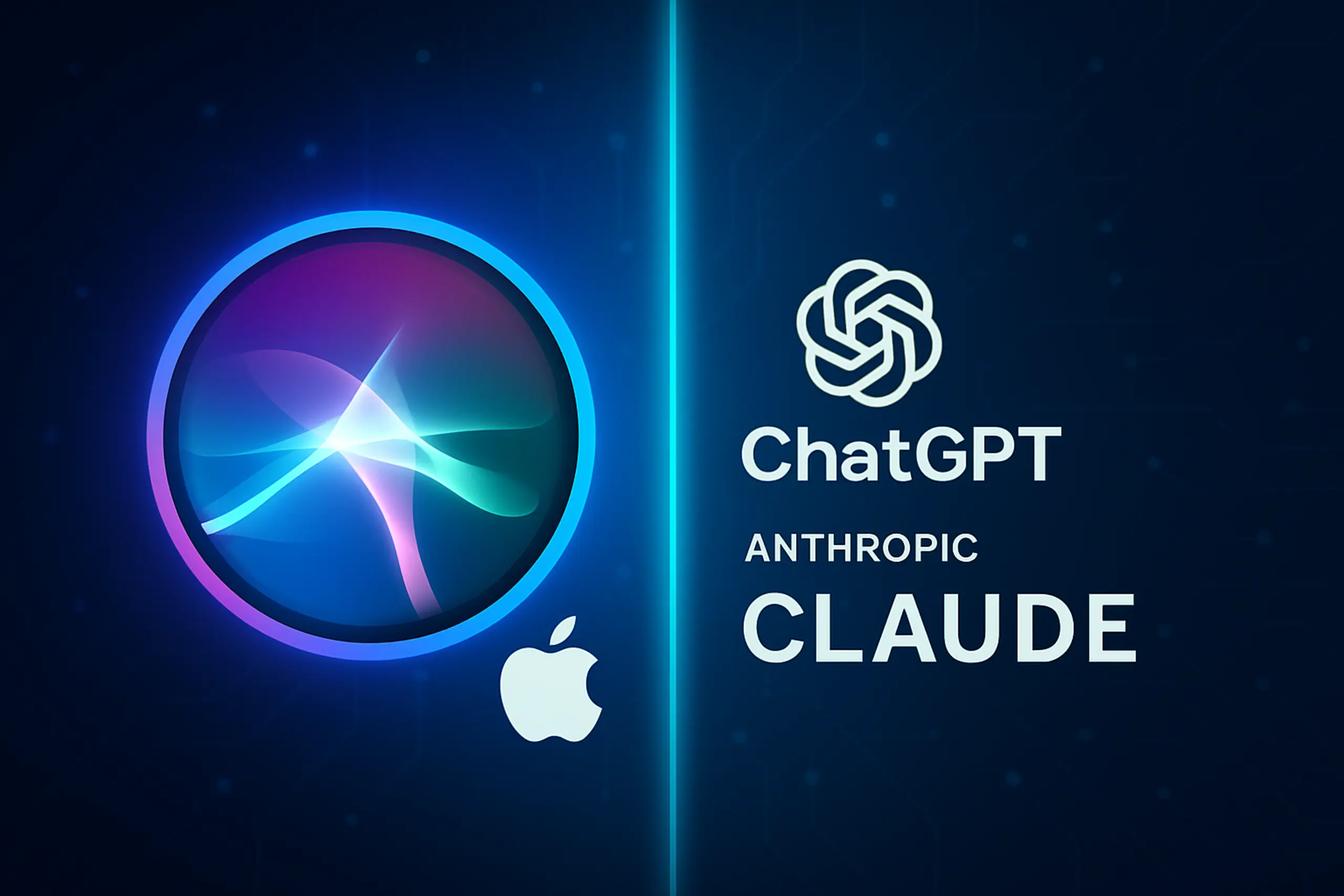
Apple, a global tech leader long known for its tight ecosystem and privacy-first philosophy, is reportedly considering a major shift in its artificial intelligence (AI) strategy. According to industry insiders, Apple is exploring partnerships with leading AI companies like OpenAI and Anthropic to upgrade its virtual assistant, Siri.
This potential move marks a significant reversal from Apple’s traditional approach of developing its software solutions internally. But why is Apple choosing this path? And what does it mean for its AI ambitions, user privacy, and the stock market? Let’s explore the full story.
Why Apple is Reconsidering Its AI Approach
Since its debut, Siri has been a central feature of Apple’s devices. While it was a groundbreaking innovation back in 2011, Siri has since fallen behind AI-powered assistants from rivals like Google Assistant, Amazon Alexa, and even newer tools like ChatGPT.
Apple has historically preferred to develop its technologies in-house. However, building a competitive large language model (LLM) like GPT-4 or Claude requires billions in R&D, top-tier AI talent, and massive computing infrastructure. Partnering with already established AI firms could help Apple leapfrog years of development.
The AI Partners: OpenAI vs. Anthropic
Let’s look at the two main players Apple is reportedly considering:
OpenAI (Makers of ChatGPT)
- Strengths: Highly advanced conversational models, proven user experience, widespread adoption.
- Challenges: Runs models via external cloud; privacy concerns could arise if not handled carefully.
Anthropic (Makers of Claude)
- Strengths: Focus on safety and alignment, more privacy-friendly architecture, growing enterprise usage.
- Challenges: Less well-known than OpenAI; ecosystem still maturing.
Both companies offer large language models that can support natural voice interaction, real-time information retrieval, and contextual understanding — exactly what Siri needs to become competitive again.
What This Means for Siri
If Apple proceeds with integrating one of these AI partners, Siri could undergo its most significant transformation ever. Here’s what users might expect:
- Smarter Conversations: Instead of basic commands, users could ask Siri complex questions and get contextual, human-like answers.
- Better Personalization: AI models can adapt to user behavior over time, offering personalized suggestions and reminders.
- Multi-modal Interaction: Future Siri could handle voice, images, and possibly even text input from apps — making it more versatile.
Apple’s Privacy Challenge
Apple is known for protecting user privacy — it’s one of the company’s key selling points. So how can it integrate third-party AI models without compromising on that promise?
One likely solution is running external models on Apple’s own cloud infrastructure. This would allow Apple to control how data is processed and stored, keeping it private while still delivering powerful AI features.
This hybrid approach (on-device + Apple-cloud AI) would allow basic tasks to be handled locally, while more complex interactions are processed securely in the cloud.
Impact on AAPL Stock and Investors
Tech investors are watching this development closely. Here’s why:
- Cost-Efficiency: Building an LLM from scratch can cost billions. By licensing from OpenAI or Anthropic, Apple can save time and money, focusing instead on integration and UX.
- Competitive Edge: With generative AI now embedded into products from Microsoft, Google, and Samsung, Apple needs a similar offering to maintain its edge.
- Stock Momentum: Positive AI news often boosts tech stocks. If this move results in a more capable Siri, AAPL stock could benefit from improved product perception and investor sentiment.
Will Users Accept This Change?
Some Apple users are excited about this evolution, especially if it brings Siri on par with tools like ChatGPT. However, privacy-conscious users may have concerns about Apple depending on external vendors.
Apple will need to clearly communicate:
- How user data is handled
- Where AI processing takes place
- What control users have over their data
Transparency and trust will be critical to user acceptance.
AI Is the Next Platform Shift
We are entering a new era of computing, where AI is the interface. Voice assistants, predictive apps, AI-powered automation — they all rely on LLMs and generative models. Apple recognizes this shift and appears ready to adapt.
Whether it chooses OpenAI or Anthropic (or both), this decision could define the next decade of Apple innovation.
Conclusion
Apple’s rumored move to integrate AI models from OpenAI or Anthropic into Siri marks a new chapter in the company’s strategy. It reflects both the urgency to stay competitive in the AI race and the opportunity to deliver smarter, more helpful tools to users.
As Apple gears up for this possible transformation, the entire tech world is watching. And for users? The promise of a vastly more intelligent Siri may finally become a reality.