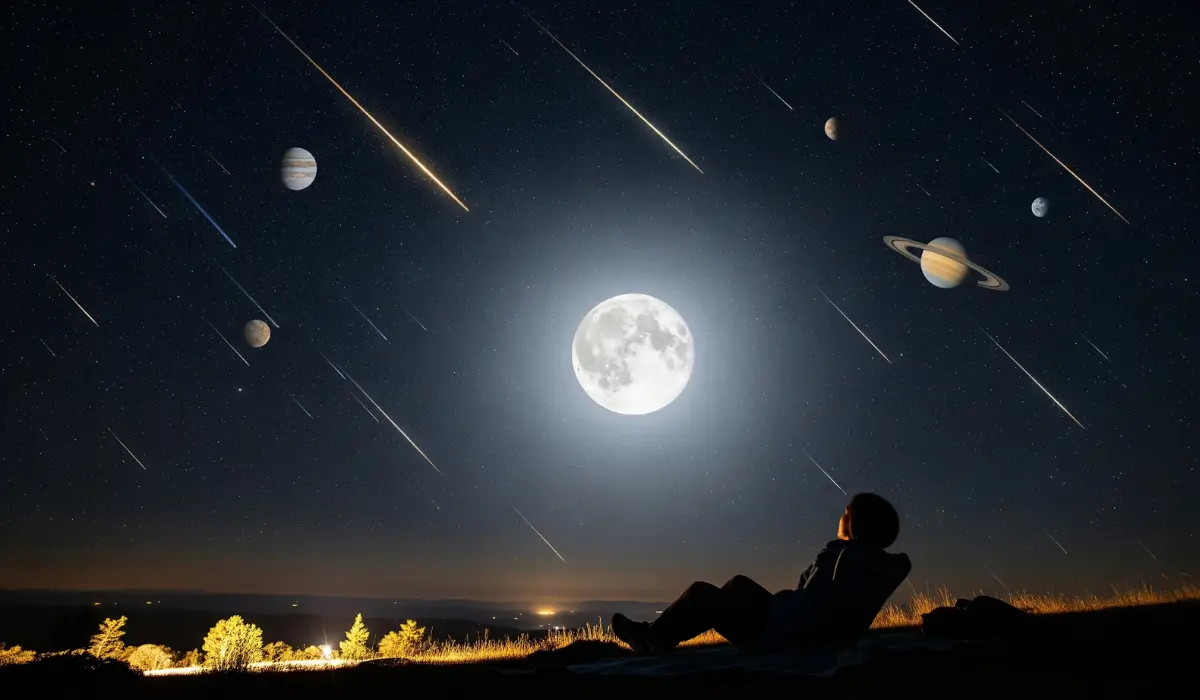
August 2025 is shaping up to be a truly spectacular month for stargazers and space enthusiasts around the globe! Whether you’re hoping to catch shooting stars, enjoy a brilliant full moon, or simply gaze at dazzling planetary gatherings, this month’s night sky has it all. Here’s your guide to the cosmic highlights and how to get the best view, no matter where you are.
Perseid Meteor Shower: Behold Nature’s Fireworks
One of the year’s most anticipated celestial shows, the Perseid meteor shower, peaks the nights of August 12–13. Normally, the Perseids deliver 50–100 meteors per hour, but this year’s show comes with a twist: a bright, 84% waning gibbous moon will light up the sky, diminishing visibility for all but the brightest meteors. Still, patient observers can expect to see 10–20 dazzling meteors per hour, particularly just before dawn.
How to Watch:
- Timing: The best viewing is after midnight and in the pre-dawn hours.
- Where to Look: Face northeast, toward the constellation Perseus. The meteors can appear anywhere in the sky, but they will seem to originate from this direction.
- Pro Tip: Escape city lights! Let your eyes adjust for 15–20 minutes, and focus on as much open sky as possible.
- Insider Tip: Try viewing a few nights before the peak as well, when the moon is less overwhelming.
also read: Solar Eclipse on August 2, 2025 Will Cast the Earth in Shadow: Time, Location, and How to Watch
The Stunning Sturgeon Moon: August’s Full Moon Performance
Rising to its fullest on August 9, the Sturgeon Moon will illuminate the night with its signature brilliance. Known for signaling the annual sturgeon fish harvest in Native American tradition, the Sturgeon Moon also goes by the names Corn Moon and Grain Moon in various cultures—a nod to the late summer’s rich agricultural bounty.
What’s Special This Year?
The Sturgeon Moon will be at its brightest for two nights, bathing summer landscapes in a magical glow. Astrologically, this full moon appears in Aquarius, highlighting themes of social connection and forward-thinking energy.
Best Viewing Tips:
- Look east at sunset for the majestic moonrise.
- For the most breathtaking photos, catch the moon on the horizon, when it often appears oversized and possibly tinged orange.
Celestial Pairings and Planetary Spectacles
Skywatchers, take note! The cosmos is putting on a multifaceted performance:
- Venus–Jupiter Conjunction: Early morning on August 11–12, the two brightest planets draw strikingly close together, just one degree apart. Look low on the eastern horizon before sunrise.
- Planet Parade: Saturn and Neptune pair up near the full moon after mid-month. Venus and Jupiter continue shining side by side later in August.
- Deep Sky Bonus: August’s new moon (August 23) brings dark skies ideal for viewing the Dumbbell Nebula (M27), Milky Way, and even the distant Andromeda Galaxy from rural locations.
Skywatching Tips from NASA
NASA’s recommendations are echoed throughout the astronomy community:
- Find the Dark: Head to rural or high-elevation spots for truly dark skies.
- Be Patient: The Perseids will be best just before dawn, especially away from bright moonlight.
- Bring Friends: Many celestial moments are best shared—plus a thermos and a blanket go a long way!
Final Thoughts
Despite this year’s bright moon slightly dimming the Perseids, August 2025 still promises skywatching magic for anyone willing to look up. Plan your cosmic getaways and don’t miss the chance to witness shooting stars, a glowing Sturgeon moon, planetary dances, and deep-sky marvels all month long.
Clear skies and happy stargazing!